How to Measure AI Visibility: 5 Core Metrics
AI-assisted draft; it is read in full before publication and claims are checked against primary sources. Our content process
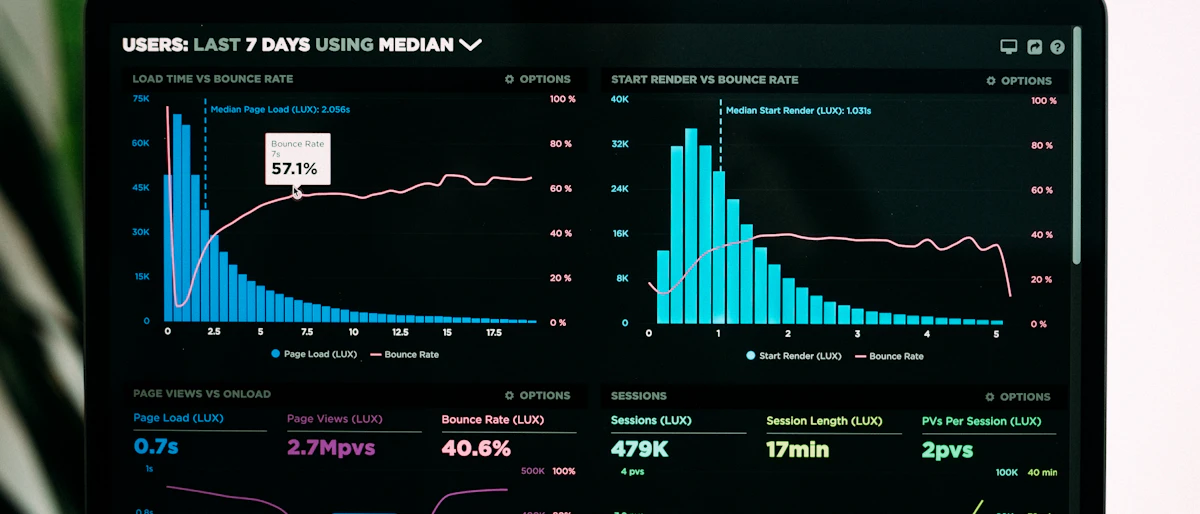
AI visibility is the measurement of how often, in what context and how accurately your brand appears in the answers AI chat engines generate; it is tracked with five core metrics: mention rate, sentiment, factual accuracy, recommendation frequency and competitor co-mention frequency.
Most businesses putting budget into GEO (Generative Engine Optimization) get stuck at the same point: is the work producing a visible result, and if so how would anyone know? Classic SEO had rank tracking, clicks and impressions. AI answers have no ranked list; you appear inside a sentence or you do not.
That uncertainty leads to two mistakes. First: nothing is measured, so people conclude nothing worked. Second: the brand name came up in one chat, so people assume the job is done. The five metrics below and the protocol at the end give you a routine avoiding both extremes — free, and workable by hand.
Why Standard Analytics Does Not Answer This Question
Your analytics panel shows traffic arriving at your site. An AI answer often produces no visit: the user gets the answer in the chat window and never comes. They read your brand name, keep it in mind, and days later search for you or pick up the phone. That first step is recorded nowhere.
Referrer data falls short too. When some answer engines give a link the visit shows in analytics, but cases where your name appears with no link are at least as common. AI visibility must therefore be measured from the answer itself, not from traffic. The only practical way: ask the engines what your customer would ask, and record what comes back.
The 5 Metrics You Should Measure
The five mean something only read together. One alone misleads: if your name comes up often but with wrong information, rising visibility may be harming you.
| Metric | What it measures | How it is measured | How often |
|---|---|---|---|
| Mention rate | What percentage of your questions name your brand | Ten fixed questions; answers naming you divided by the total | Monthly |
| Sentiment | Which adjectives accompany your name | Descriptive sentences marked positive / neutral / negative | Monthly |
| Factual accuracy | Whether what is said about you is true | Service, city, specialism, contact details checked one by one | Monthly, immediately on any error |
| Recommendation frequency | Being actively recommended, not merely named | Phrases such as "I would suggest" or "a good option" counted | Monthly |
| Competitor co-mention | How many competitors you are named alongside | Other company names listed; repeats marked | Quarterly |
Mention rate is the most basic indicator and gives a percentage on its own: three of ten questions is 30 per cent. Do not panic if it starts at zero; after new content, the first change usually takes weeks.
Sentiment captures how your name is mentioned. "One of the better-known practices in the area" and "there is not much information about them" are completely different situations behind the same mention count.
Factual accuracy is the most neglected metric and the most critical. Lacking data about you, models fill gaps with guesses: wrong city, a service you do not offer, a closed branch. The source is usually your own out-of-date directory listings or old press coverage.
Recommendation frequency measures the gap between being named and recommended. It carries the highest commercial value: what stays in a user's head after the chat closes is not the name mentioned but the one recommended. We covered the mechanism beneath it in how your brand gets recommended in ChatGPT and Gemini.
Competitor co-mention tells you which firms the model groups you with. The same three names beside you repeatedly means you are in its category list. If none appears and you get only generic advice, the category is thinly represented — an advantage for whoever moves early.
A Self-Test Protocol You Can Run Today
No paid tool is needed. A spreadsheet and about an hour will do.
- Write down customer questions. Note the ten you hear most on the phone and in sales meetings, in your customers' own words.
- Turn them into category questions. Do not ask "what is my brand"; use the form your customer would. Example: "which accounting consultancy is best for small businesses in Izmir?"
- Fix the set. Never change these ten again. Comparability depends on the question staying fixed.
- Ask three engines the same day. Put the same ten questions to ChatGPT, Gemini and Perplexity. Different days mix engine differences with time differences.
- Turn session history off. Use history-disabled or guest mode where possible. Your account's history can show a flattering picture true only for you.
- Record the answer verbatim. Copy the text, not a screenshot. You will need to search inside it.
- Mark the five metrics. For each answer: was my name there, in what tone, was the information right, was there a recommendation, which competitors appeared.
- Write the date and repeat monthly. One measurement is not data; the second produces a comparison, the third a trend.
Do Not Ask "What Is My Brand": Building the Right Question
The most common mistake ruining measurement is asking about the brand name directly. Ask "what is X Consulting?" and the model answers using the name you handed it. That measures not visibility but how much information the model holds. Different things.
Real visibility is your name surfacing without you saying it. The question needs three components: service, audience and location. "Which digital agency should small businesses with an e-commerce site in Ankara work with?" carries all three and resembles what your customer types.
When building your set, watch for these:
- Mix intent levels: informational ("how to choose a ..."), comparison ("difference between ... and ..."), direct purchase ("recommend a firm for ...").
- Use at least two variants by changing the location; include the second city you serve.
- Do not copy questions from your own website's headings; your customer does not know them.
The set is also the skeleton of your content plan: every question you are missing from points at a page nobody has written. To systematise that link, the how to build a GEO strategy guide walks from question set to content calendar.
How to Keep Your Measurement Log
The point of records is answering "did it really improve?" six months on with data, not a feeling. A simple table is enough; open a new sheet each month.
| Date | Engine | Question no | Mention (Y/N) | Tone | Info correct | Recommended | Competitors named |
|---|---|---|---|---|---|---|---|
| 01.09 | ChatGPT | 1 | Y | Neutral | Partly (wrong city) | No | A, B |
| 01.09 | Gemini | 1 | N | — | — | — | A, C, D |
| 01.09 | Perplexity | 1 | Y | Positive | Yes | Yes | B |
At month end produce three numbers: mention rate per engine, recommendation rate, and the three competitors appearing most often. That is the plainest AI visibility report you can put before a management meeting.
Why Turkish Queries Return Different Results
For a business operating in Turkey, measuring in English is misleading. The same question in Turkish and English is widely observed to produce different answers. One likely reason is that English content carries a high weight in the models' training data; the engines do not disclose this in detail.
In practice these behaviours stand out:
- Asked in Turkish, a model that cannot find enough Turkish material can drift to a generic answer built from English sources. You then see international names or generic advice instead of local firms.
- On local category questions, sites with strong Turkish content can get ahead of larger competitors whose Turkish content is weak.
- We found no primary-source data on how much each AI assistant is used in Turkey. That is why measuring all three is worthwhile; the engines' source preferences differ, so appearing in one does not guarantee appearing in another.
The opportunity is obvious: for businesses producing quality Turkish content, competition is markedly thinner than in English. Becoming one of the few sources answering your sector's Turkish questions accurately, in detail and in structured form moves your numbers fastest.
When Do the Results Start to Mean Something?
One measurement is a photograph, not a decision. Models answer the same question differently at different times; that variance is inherent. Do not read a trend before three months of series.
Common measurement mistakes:
- Deciding from one question. A ten-question set balances the randomness of any single one.
- Testing on your own account's history. An account where you have discussed your own brand will favour you.
- Asking a leading question. "Is X the best agency?" buries the answer inside itself.
- Attributing improvement to one source. A visibility rise is the joint result of content, directory listings, press and reference sites.
On factual accuracy, though, do not wait when you see an error. The source of wrong information is usually an old record outside your site, and the correction can take weeks to reach answers.
Turning Measurement into Action
Each metric points at different work. Low mention rate: the problem is visibility — content answering category questions is missing. Weak sentiment: the problem is evidence — case write-ups, references and expertise signals are thin. Wrong information: the problem is records — directories, the map listing and on-site structured data need updating. Low recommendation frequency with a high mention rate: the problem is positioning — who you are right for, and when, has not been written down clearly.
If the routine runs but you are unsure how to read the table, look at the GEO and content services we offer or request a free business analysis: in that initial conversation we talk through the questions your customers ask and agree the right scope together.
When manual measurement stops being enough, the comparison of AI visibility tracking tools shows which fits your situation. We covered the paid side of the same measurement, meaning where ads land in AI answers, separately in our article on AI Overviews and AI Mode ads. We also explained why the score a testing tool gives does not replace this measurement in our article on AI visibility tests versus GEO audits.
Frequently Asked Questions
How do I know whether ChatGPT is recommending me?
Ask the category question your customer would ask, without giving your brand name — "recommend an accounting consultant for small businesses in Bursa". If your name comes up on its own, you are being recommended. Run the test with your account's history off, or earlier conversations can skew the result in your favour.
Do I need a paid tool to measure AI visibility?
No. With a fixed set of ten questions, a spreadsheet and one hour a month you can track all five metrics by hand. Paid tools scale and automate, but a hand-kept log at the start is incomparably better than not measuring at all.
What is mention rate, and what counts as a good value?
Mention rate is the percentage of your questions in which your brand name appears; three of ten is 30 per cent. There is no universal "good" threshold — the value varies enormously by sector, city and competitive density. What matters is the direction over months against your own baseline.
Should I test in Turkish or in English?
Test in whichever language your customer asks in; for a business serving Turkey that is Turkish. Because answers to the same question in the two languages frequently diverge, a measurement made in English will not represent your real customer experience.
How often should I repeat the measurement?
Monthly is enough for mention rate, sentiment, factual accuracy and recommendation frequency; competitor co-mention analysis is generally fine quarterly. Measuring more often can lead you to mistake the models' natural answer variance for real improvement or decline.
Discussing the return on an investment you are not measuring is hard. Prepare the question set today, take your first measurement, and you have a starting point. To decide together which questions your sector needs and have us take the first measurement, at Next GEO Agency we can map your current AI visibility and present it in a plain report.